
#Project | New Assignment
SETIN has been awarded a new consultancy assignment by Conservation International to conduct two Natural Capital Accounting assessments in Angola, covering Luengue-Luiana National Park, within the Kavango-Zambezi Transfrontier Conservation Area, and Iona National Park, within the Iona–Skeleton Coast Transfrontier Conservation Area.
The assignment is supported through funding from the Global Environment Facility (GEF) and contributes to a broader GEF-7 initiative promoting biodiversity conservation, climate resilience, and sustainable natural resource management.
The assessments aim to develop a comprehensive, evidence-based understanding of the natural capital of these two conservation landscapes, including the extent and condition of their ecosystems, the services they provide, and their economic contributions.
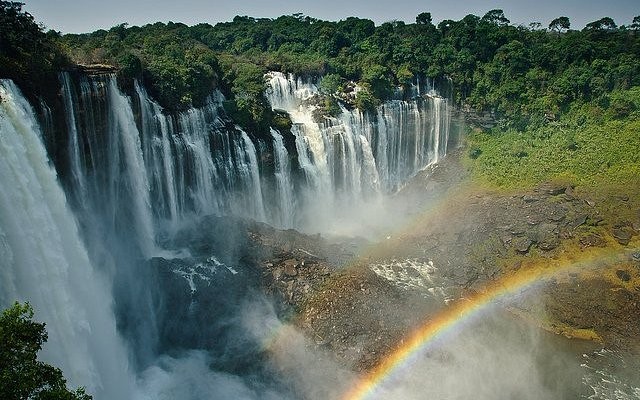
Angola hosts ecosystems of outstanding ecological importance, including savannas, forests, wetlands, drylands, coastal habitats, and marine ecosystems. Among these, Luengue-Luiana and Iona National Parks represent two particularly important conservation landscapes.
Located in southeastern Angola, Luengue-Luiana National Park forms part of the Kavango-Zambezi Transfrontier Conservation Area, one of Africa’s largest transboundary conservation landscapes. The area plays an important role in biodiversity conservation, ecological connectivity, wildlife habitats, and the provision of ecosystem services.
In southwestern Angola, Iona National Park is characterized by arid and semi-arid ecosystems, distinctive desert landscapes, coastal habitats, and significant biodiversity. Its ecosystems provide essential services that support local communities, wildlife conservation, and economic activities, despite the challenges associated with water scarcity and climate variability.
Both landscapes face challenges related to climate change, ecosystem degradation, natural resource pressures, and the need to reconcile biodiversity conservation with sustainable economic opportunities for local communities. Understanding the condition and value of their natural assets is therefore essential for developing effective conservation and management strategies.
In this context, Natural Capital Accounting provides an approach to systematically measure and monitor a country’s or territory’s natural assets, including ecosystems, biodiversity, water resources, soils, and vegetation.
This approach makes it possible to understand:
- What ecosystems exist and where they are located
- How their extent and ecological condition are changing over time
- What ecosystem services they provide to people and nature
- How these services contribute to local livelihoods, economic activities, and climate resilience
- How natural capital information can inform spatial planning, investment, and conservation decisions
The assessments will be aligned, as far as possible, with the United Nations System of Environmental-Economic Accounting – Ecosystem Accounting (SEEA EA), an internationally recognized statistical framework for integrating ecosystem information into decision-making.
To develop these assessments, SETIN will combine Geographic Information Systems (GIS), Earth Observation data, environmental analysis, ecosystem-service assessment, and selected economic valuation methodologies. The technical work will be organized around four main components, providing a comprehensive understanding of the extent, condition, services, and economic contributions of the ecosystems within the two conservation landscapes.
The first component will focus on ecosystem mapping and extent accounting. SETIN will identify, classify, and map the principal ecosystem types within the two conservation landscapes. Using satellite imagery, GIS analysis, and available environmental datasets, the team will examine land-cover and ecosystem changes over time. This will help identify patterns of ecosystem transformation, including potential degradation, restoration, and land-use changes.
Building on this mapping exercise, the second component will assess the ecological condition of the identified ecosystems through environmental indicators. This analysis will provide a spatial understanding of ecosystem condition and help identify priority areas for conservation, restoration, and sustainable management.
The third component will focus on assessing selected ecosystem services provided by the conservation areas, including:
- Climate regulation: assessing the role of ecosystems in carbon retention and sequestration
- Water-related ecosystem services: analysing water-flow regulation in Luengue-Luiana and water supply in Iona
- Biodiversity and habitat maintenance: assessing how ecosystems support wildlife populations, habitat suitability, and ecological connectivity
- Other selected ecosystem services: potentially including recreation-related services, depending on data availability and the agreed methodology
This assessment will produce quantitative indicators and spatial information to improve understanding of the benefits generated by ecosystems.
Finally, the fourth component will address the economic valuation of ecosystem services. Where supported by reliable data and appropriate methodologies, SETIN will estimate the economic value of selected ecosystem services, with the objective of demonstrating how natural ecosystems contribute to economic activities, livelihoods, and environmental sustainability.
By combining these four components, the assessments will provide evidence to support the consideration of natural capital in investment decisions, conservation financing, and sustainable development strategies. The assignment will involve a team of experts, including Daniel Bazzucchi, Abilio Malengue, Giacomo Cozzolino, Alessandro Piazzi, Riccardo Leone, and Viola Fonnesu.